OTHER SOURCES:
Another excellent presentation is available at uspowtbr.com’s 11.8 Shimoda crash (offsite link) which credits Thansawath as a major source.
General Nakamura’s diary: relevant portions of General Nakamura’s diary (published in Thai) are attached. The Thai text provides no information not already covered here, but is included for the benefit of Thai readers:1
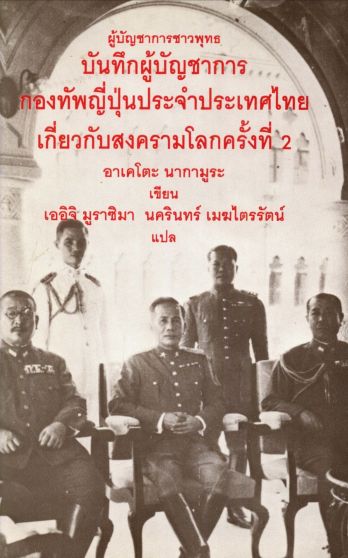
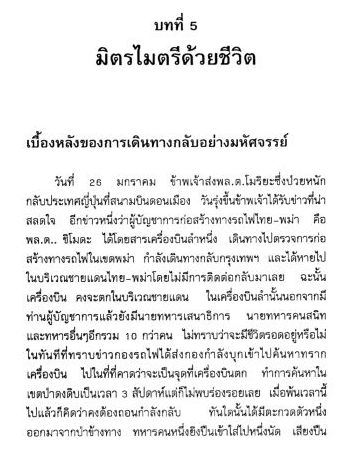
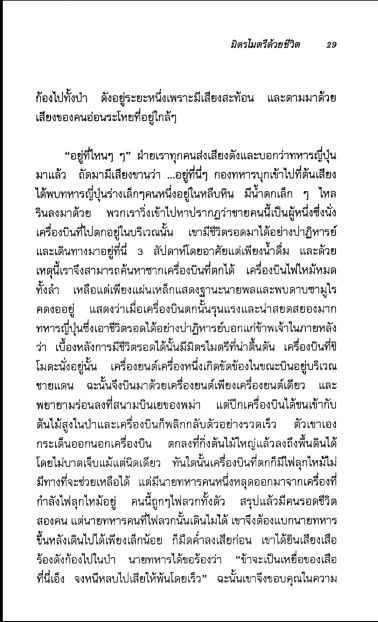
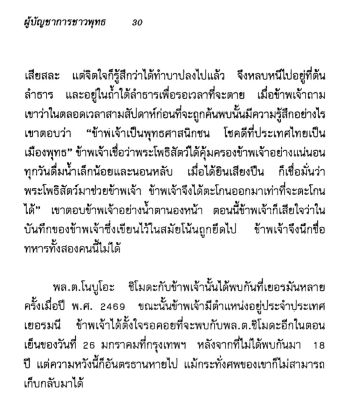
Translation:
From: Akito Nakamura, with Eiji Murashima and Nakarin Mektrairat, Buddhist Commander General Nakamura’s memories of Thailand during WWII (Bangkok: Matichon, 2003), pp 28-30:
Chapter 5
Friendship with life
Behind the scenes of a wonderful way back
On January 26 [1943], I returned from Japan to Don Mueang Airport. The next day I received the tragic news that the Thai-Myanmar railway construction commissioner, Major General [Nubuo] Shimoda, had been on a plane inspecting the construction of railways in Burma; and on the way back to Bangkok, the plane disappeared in the area of the Thai-Burma border, with no communication indicating any trouble.
On board the plane, besides the commander, was the Chief of Staff, adjutant officers, and more than 10 other soldiers
It was not known if they had survived. As soon as it was clear that the plane had crashed, troops were sent to search for the plane where it was supposed to have gone down. They searched in the rainforest for three weeks but found no trace of the plane, and were about to return without result, when a monitor lizard came out of the forest beside the road. One of the soldiers shot it. The sound of the gunshot echoed throughout the forest, and was followed by a faint voice nearby: “Where are you?” All of them shouted loudly that Japanese soldiers had arrived. Next, there was a voice saying “I’m here”. The troops ran to find a small Japanese soldier in a rocky pit, with a small waterfall nearby.
It turned out that this man had been on a plane that had crashed in that area. He had miraculously survived for three weeks, only drinking water. And so it was that we were able to locate the wreckage of the crashed plane. The entire plane had burned. All that was left was a metal plate with the general’s name and a bent samurai sword. This showed how violently the plane had crashed, the survivor later told them.
Behind this survival lies an amazing friendship.
The plane on which Shimoda was a passenger had one engine fail while flying across the border. Continuing to fly but on only one engine, the pilot tried to reach the airstrip at Ye in Burma. But the wing of the plane clipped a tall tree in the forest and the plane quickly rolled over and crashed. The survivor was thrown from the plane to land on the branch of a large tree and continue to the ground without injury.
However, the plane wreckage caught fire and there was no way to help. A single soldier, an officer, somehow got out of the burning wreckage; but he was very badly burned. So there were two survivors, but the burned officer couldn’t walk; so the other man had to carry him, moving very slowly. It was already dark.
In the distance, they heard a tiger roaring. The officer said, “Let me be the prey of the tigers here. Run away quickly.”
So the man thanked the officer for his sacrifice, even while feeling deep remorse. He then followed the stream to its source where he found a cave, and settled in there to die.
I asked him what he had felt during the three weeks before being discovered, and he replied, “I believe the Bodhisattva was always guarding me, as I drank a little water and slept. When I heard the sound of that gun, I was convinced that the Bodhisattva was helping me, so I shouted as much as I could.”
He had answered me with tears streaming down his face. I regret that the diary that I had kept in the old house had been taken from me when we surrendered: it had the names of those two soldiers and I can’t remember them now.))
Paul Kratoska, The Thailand-Burma Railway, 1942-1946: Documents and Selected Writings (Oxfordshire: RoutledgeCurzon, 2005):2
On 26 January 1943, a serious accident had occurred, a pivotal event in a context of the explosive effect of cholera, of an early monsoon, and the effect of forced labour of coolies (Thai, Burman, Tamils, Malays, Indo-Chinese, Javanese) and on Allied prisoners-of-war alike. Major-General Shimoda Senriki’s plane crashed in teak forest on the west-facing slope of Khao Mayan Tong on an air recce of the frontier area, he and nine others including Staff Office Major Irie being killed outright. The navigator succeeded in surviving on only water for a month and crawled out of the jungle near Sonkurai (299 km [apparently the stationing there with Kanchanaburi as starting point]) and was found by a search party platoon. After the war men on the Khao Laem dam found the wrecked aircraft. Shimoda’s successor, Major-General Takasaki caught malaria at the end of April and became a sick-bed casualty. His successor, Major-General Ishida Hideguma, thus took over at a time when work was at a very low ebb and prospects gloomy. Colonel Kato, a Railway Bureau chief planner, was sent out be IJA GHQ to survey the area in detail and on his advice the completion date was put on to the end of October.
Comment: Kratoska records the crash as having occurred on the west-facing slope of Khao Mayan Tong, and the survivor having been found near “Sonkurai” (aka, SangKhla Buri, Tsongalia). The survivor would have had to climb over the summit of the ridge defining the Thai-Burma border to get to Sonkurai. This violates general instructions for someone lost, such as this survivor, to preserve his strength: travel downslope, following stream beds.3
Thansawath asked local Karen about aircraft crashes in the Mayan Thong area. They responded that they regularly hunt on both sides of the border, ie, on the western slopes of the mountain as well as their eastern side, and were aware of only the one crash site on the Thai side — nothing on the Burmese side.4
Micool Brooke: Captive of the River Kwae (Merman Books, Bangkok, 1995); p.82:5
“Another version concerns a Japanese aircraft that crashed in the wilderness of Mount Pilok, near Thong Pha Phum . . . in January 1943.” All twelve people on board – including Lt.-Gen. Shimada Nobuo, Commander of the 9th Railway Regiment – were killed in the crash, excepting one, “sparking speculation that the lone Japanese survivor buried gold bullion in the jungle before seeking help from Thai villagers. The rumour was so strong in the early 1980s that the Japanese embassy sent two officials to investigate the crash site. The embassy remained tight-lipped about what the officials found but it is known that they returned with war relics, including the general’ s sword, several submachine guns and a coin.”
National Collection of Aerial Photography does not currently offer any photographs of the area.
The Thai-Burma Railway Centre (offsite link) has no information about the Shimoda crash.
THE AIRCRAFT
The type of aircraft has not been identified.
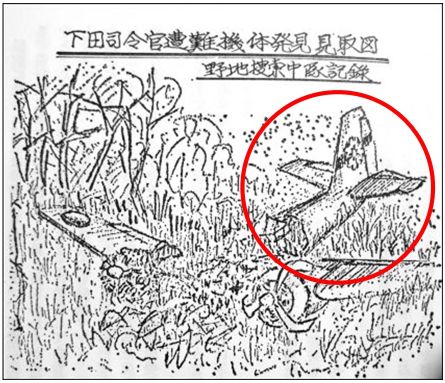
Umemoto, Hiroshi: The primary source for IJAAF losses in the area during WW2, 梅本弘 [Umemoto, Hiroshi], ビルマ航空戦・上 [Air War in Burma, Vol 1], (東京:大日本印刷株, 2002) [(Tokyo: Dai Nippon, 2002)] has no entry for 26 January 1943; this however could be because the location of the crash was in Thailand and it was not the result of enemy action. The original report contained this sketch of the plane with title in translation: “Wreck of General Shimoda’s Aircraft, from Field Search Records”:6
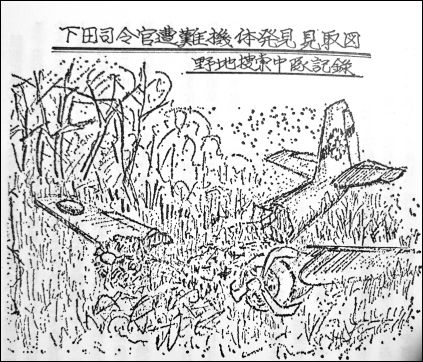
Wurger from ww2aircraft.net clarified that all Japanese aircraft [ie, both military and civilian] carry the rising sun emblem (Hinomaru marking, aka roundel) and offered some direction regarding the tail’s cherry blossom insignia:7
The markings on the tail (fin and rudder) were usually unit markings; the cherry blossom insignia was of a transportation unit.
As noted above, speculation about the aircraft model has centered primarily on three candidates: a Ki-48 light bomber, a Ki-21 heavy bomber, and a Ki-57 transport. The plane was carrying both crew and passengers, totaling eleven, with the purposes for the latter of familiarization and evaluation of the new route.
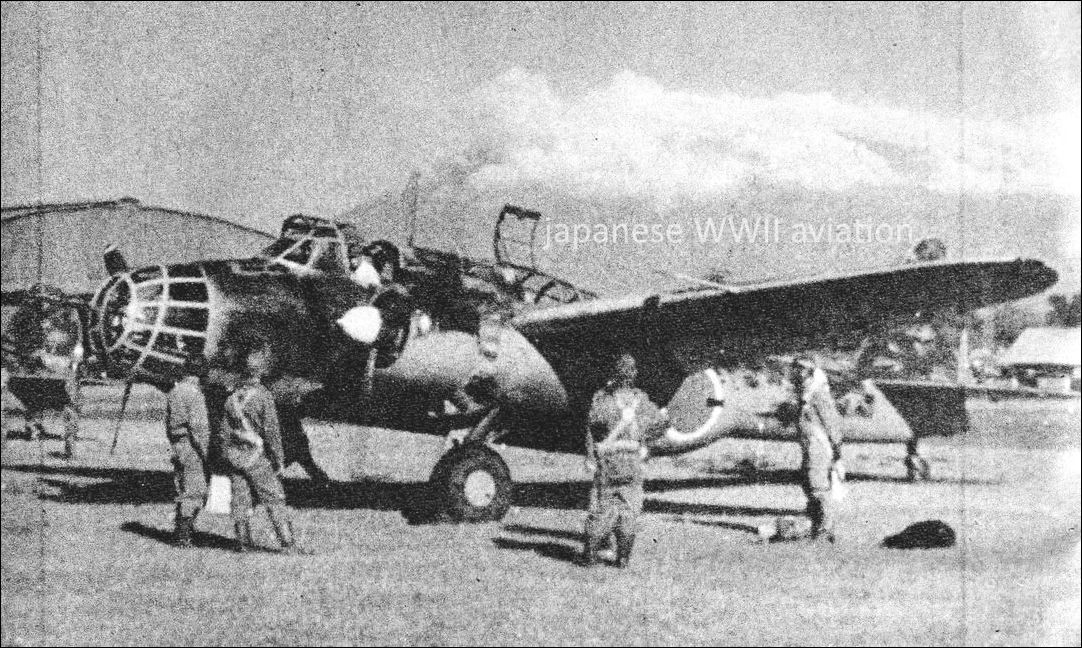
Ki-48:8 Its crew numbered four:9
-
- Pilot: Flew the aircraft. Unlike many larger bombers, it did not have a co-pilot.
- Bombardier / Nose Gunner: Operated a flexible 7.7 mm machine gun in the forward/nose position and lined up the bombs.
- Radio Operator / Dorsal Gunner: Handled communications and operated the machine gun in the upper/rear canopy.
- Navigator / Ventral Gunner: Responsible for navigation and operated the machine gun in the bottom “bathtub” style turret.
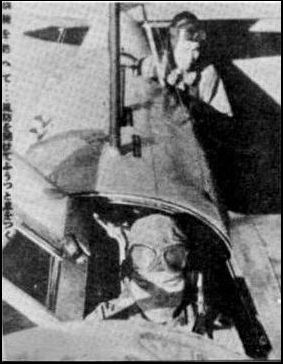
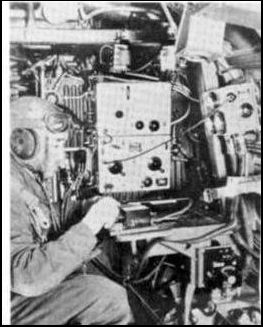
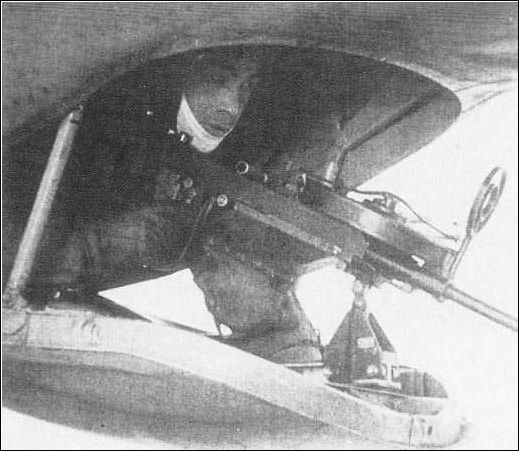
Photos of the crew in the Ki-48 emphasize the limited space available in the aircraft. Note particularly the narrowness of the fuselage in the left photo, which scaled at 1.25m — the pilot sits alone (no space for abreast seating available or required):
 |
 |
| [Nose gunner/navigator] crawling into his position from an aluminium ladder (Tohosya via Bueschel)11 | |
 |
 |
|
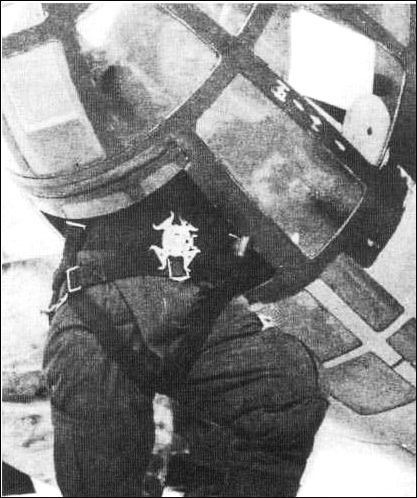
Caption: Radioman sat in cramped quarters, doubled in ventral gun position (RM Bueschel)12 |
Caption: Ventral machine gun position of a Ki-48 light bomber, circa 1940s13 |
It would not have been realistic to pour Shimoda’s seven man team into an already cramped Ki-48 and expect it to function constructively in observing and evaluating terrain over which it was to fly.
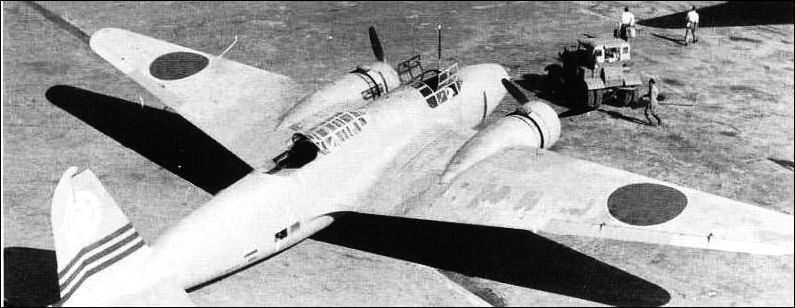
Ki-21:14 This heavy bomber’s crew size ranged from five to seven:
-
- Pilot / Aircraft Commander: Flew the aircraft and made final tactical decisions.
- Co-Pilot / Navigator: Assisted with controls, handled flight planning, and tracked the route.
- Bombardier: Sighted and released the bomb payload. (In early models, this role was often combined with the navigator).
- Radio Operator / Gunner: Managed communications and operated one or more of the defensive machine guns.
- Gunners (Up to 3): Manned the dorsal turret, ventral hatch, and side beam windows to defend the aircraft from enemy fighters.
Eliminating Bombardier and three Gunners would have reduced the crew count for this flight to three, which could account for Nakamura oddly stated count of more than ten total people having been in the aircraft. That would have opened up four spaces for Shimoda’s seven man team. A detailed legend of a cutaway / structural view of the aircraft seems to show more openings possibly available for Shimoda’s team (prefix numbers reference the view):15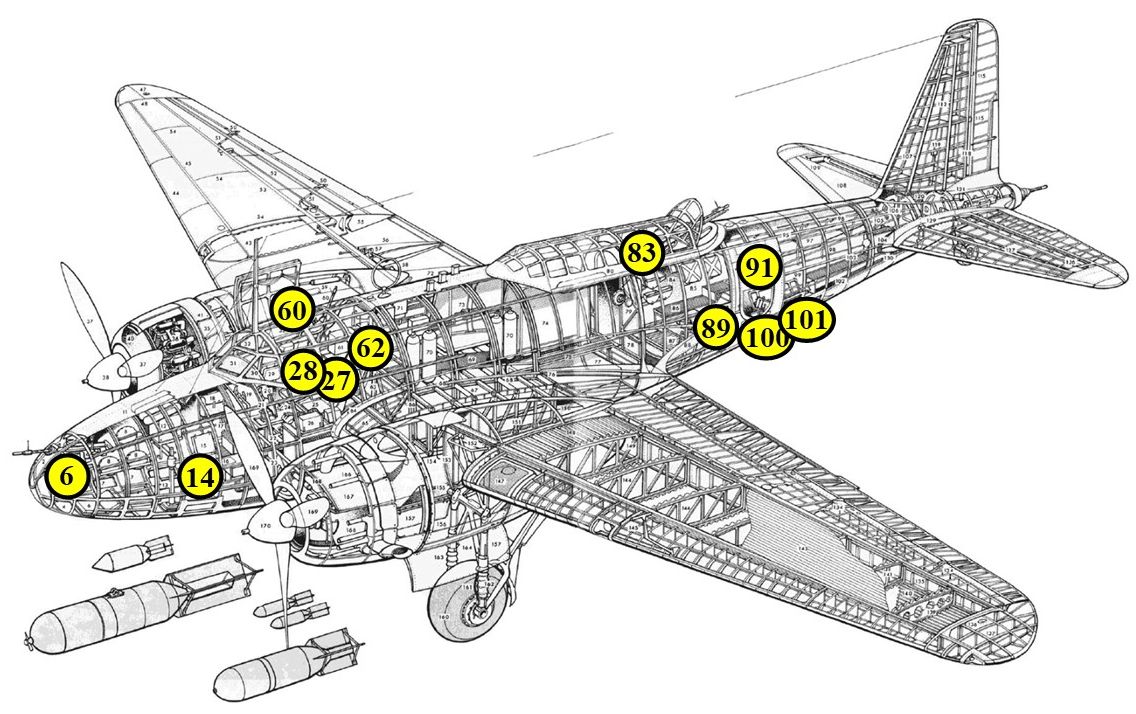
-
- 6. Front gunner’s position
- 14. Bombardier’s position
- 27. Pilot’s seat
- 28. Co-pilot’s seat
- 60. Side cockpit 7.7mm Type 89 Supplementary MG
- 62. Cockpit third crew seat
- 83. Dorsal gunner’s seat
- 89. Port lateral hatch 7.7mm Type 89 MG
- 91. Vision port (crew entry door)
- 100. Side windows [under crew entry door]
- 101. Ventral 7.7mm Type 89 MG [under crew entry door]
It would appear feasible for the seven Shimoda team members to have posted themselves at various openings / windows so as to observe the terrain over which they were flying. But communication within the plane from isolated points and with the noise from the engines and the airstream would not have been ideal.
MC-21: A long-shot alternative not named by Thansawath were transport aircraft which had been converted from Ki-21-I bombers withdrawn from frontline service due to their obsolescence. Their specifications were the same as the Ki-21-I, with military equipment and armament removed; the total number of conversions was perhaps only five.16
Ki-57:17 The civilian model, Ki-57MC-20-I, actually shown here, was supposedly identical to the military model, Ki-57. The crew size of four included pilot, co-pilot, navigator, and radio operator.
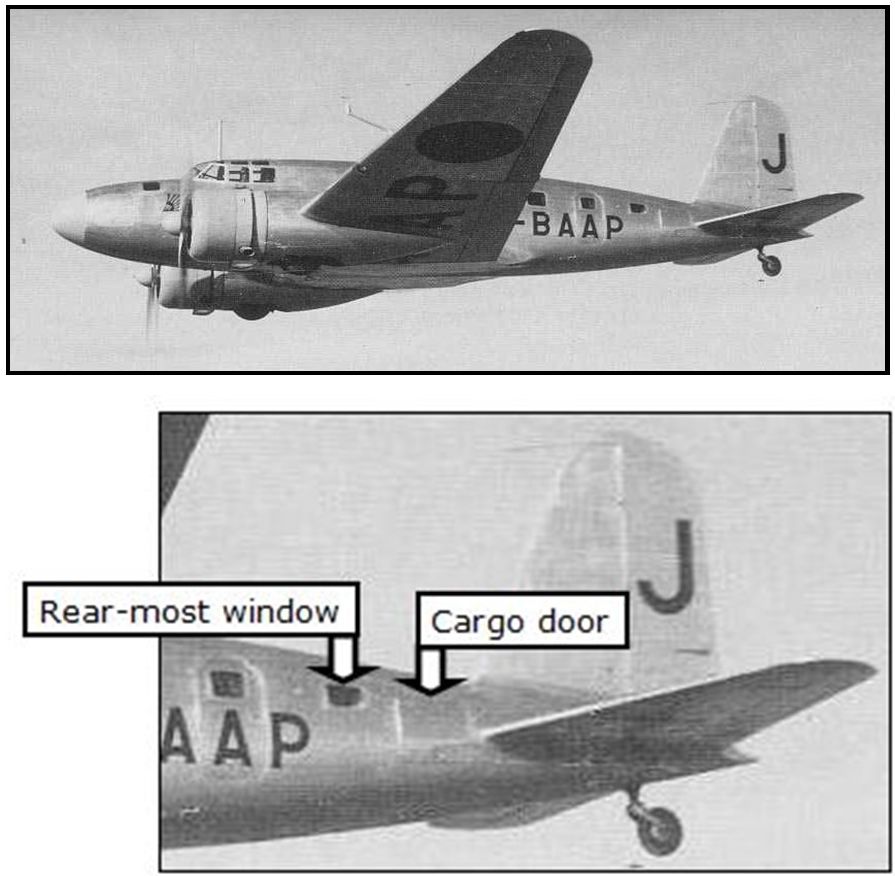
Designed to carry 11 passengers, it would seem to have been ideally suited to transport Shimoda’s seven-member team on a survey of what was to become the route of the Thai-Burmese Railway. However, the rescue team member who sketched the wreckage showed no window nor cargo door in the fuselage near the tail. We don’t know if that was an oversight on the part of the sketcher, or if he was accurate. If accurate, that missing details would eliminate the Ki-57 or its civilian version from consideration.
ADDITIONAL WRECKAGE PHOTOS
Additional wreckage photographed at the now-closed railway museum:18
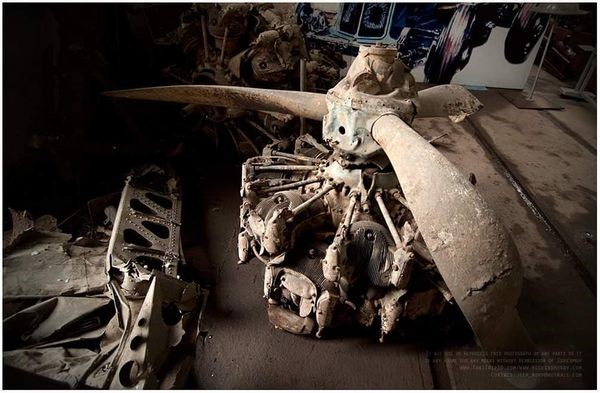
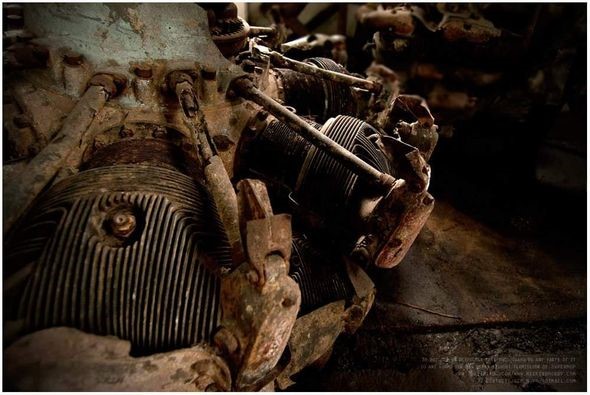
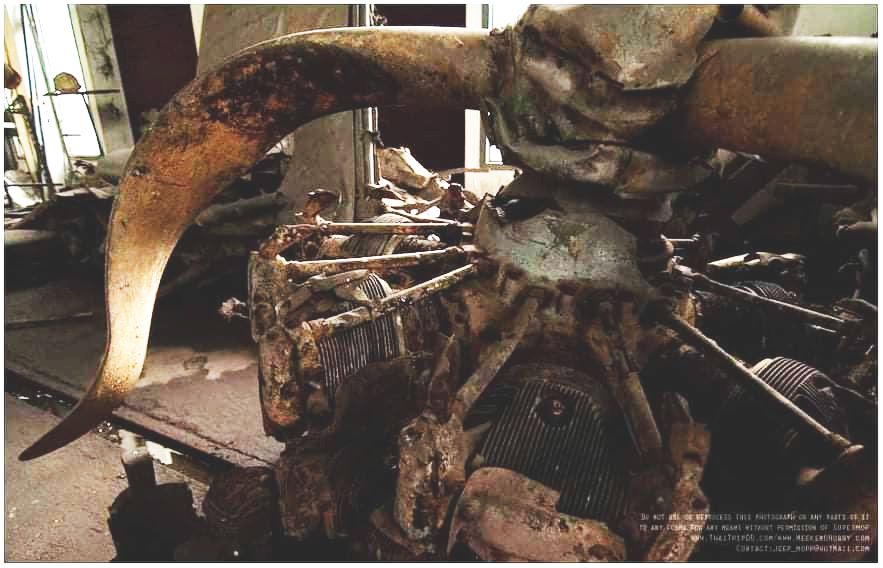
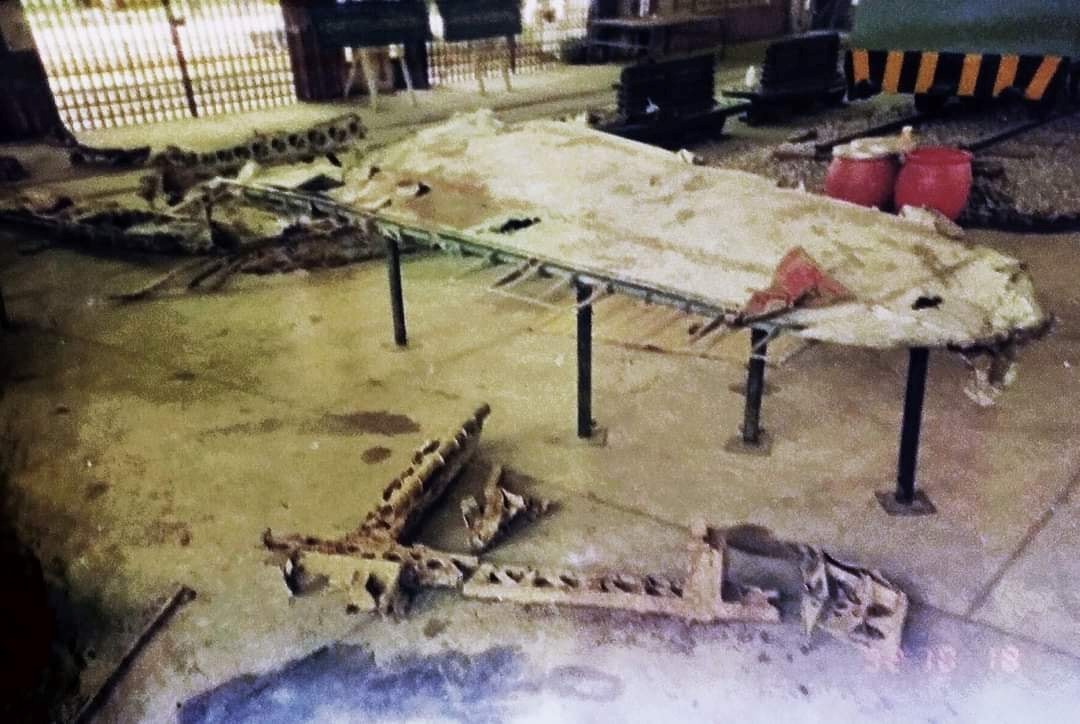
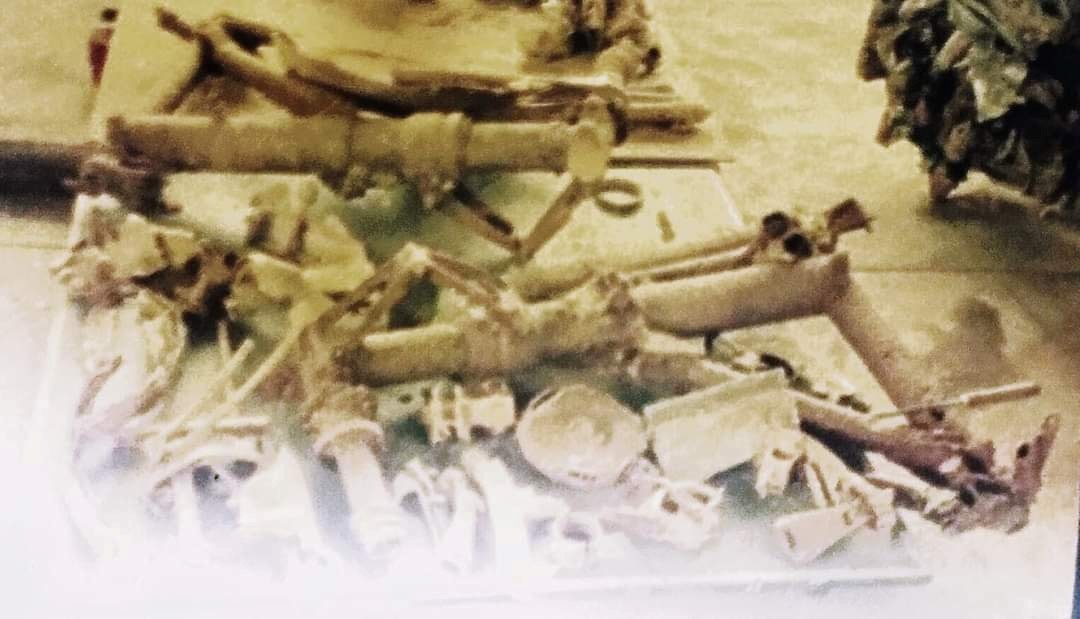
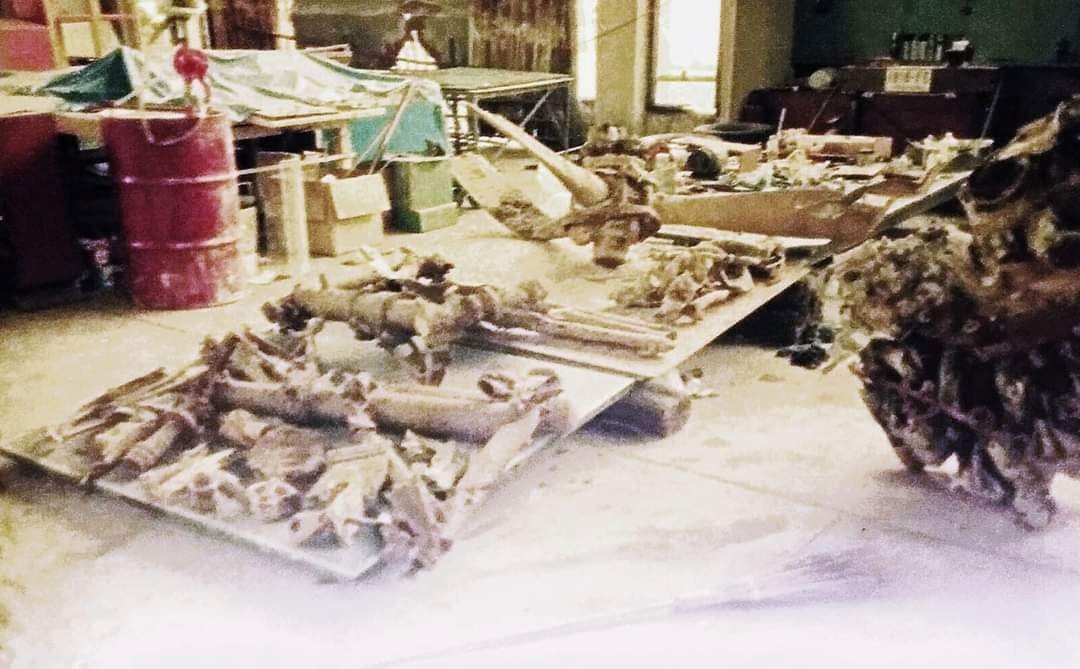
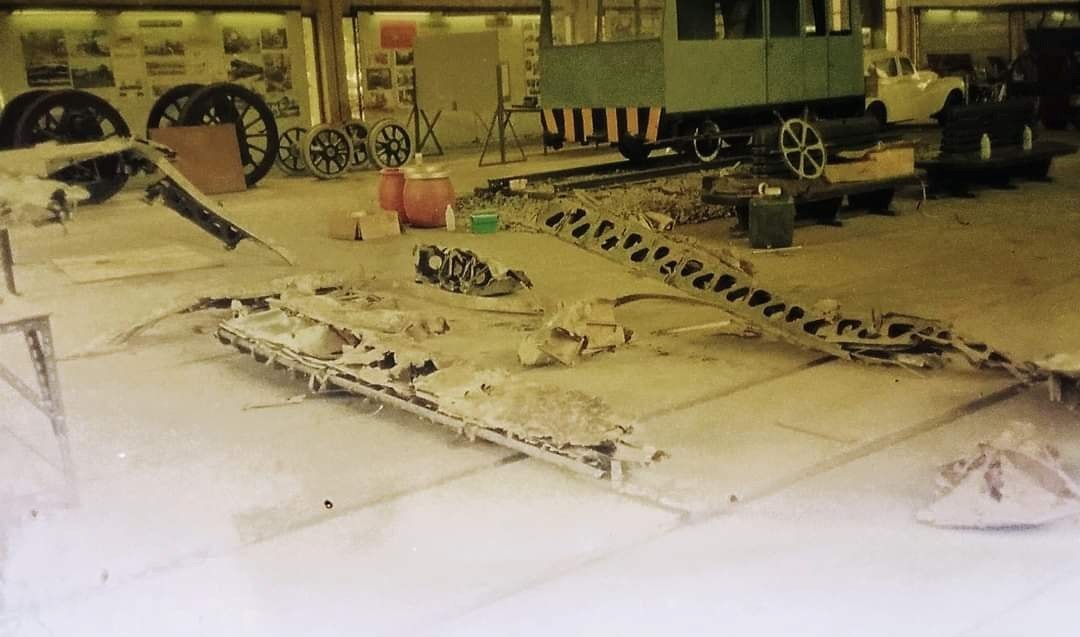
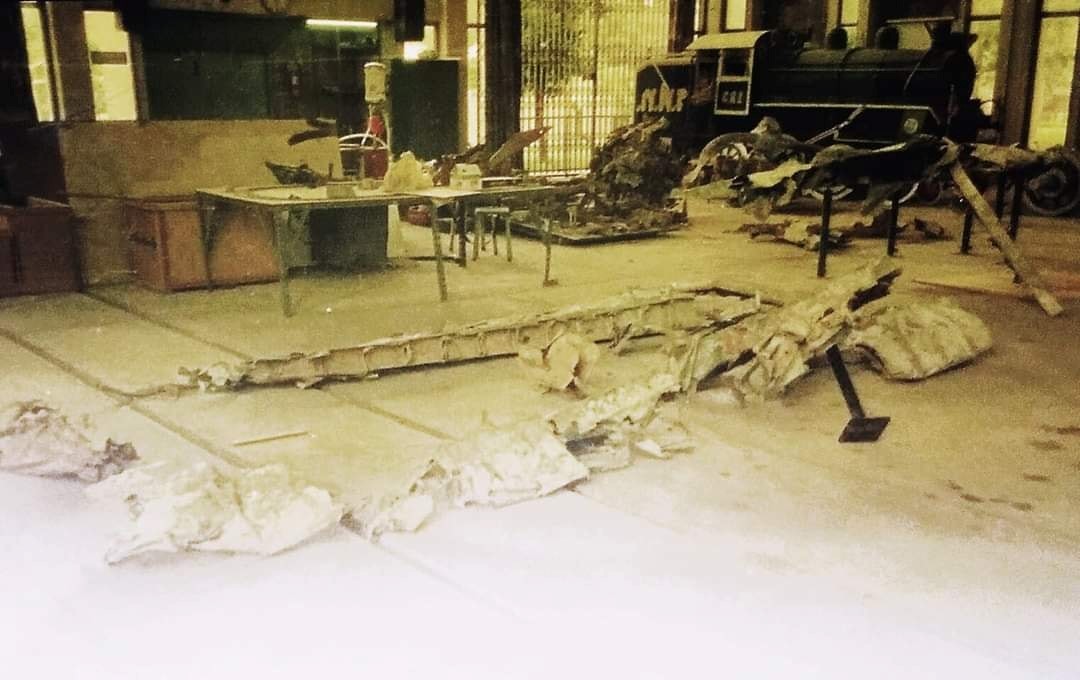
In 2019, a request (offsite link) was posted on Facebook by “Western Today Kanchanaburi” for information about wreckage identified as a Japanese B-20 fighter jet, shot down by Allied forces in the forest of Kanchanaburi during World War II, which was once displayed for tourists visiting the Bridge over the River Kwai festival. First of all, the IJAAF never had an aircraft designated “B-20”. Further, at least two of the photos appear to have been taken in a jungle, rather than a “festival” type, environment. Thansawath suggests that the wreckage pictured may have been that of Shimoda’s aircraft: the first two might have been taken during salvage work at the crash site, with the third taken perhaps after the wreckage was unloaded at Kanchanaburi. The titles on all three are approximately the same, identifying them as dealing with the wreckage of a Japanese B-20:22
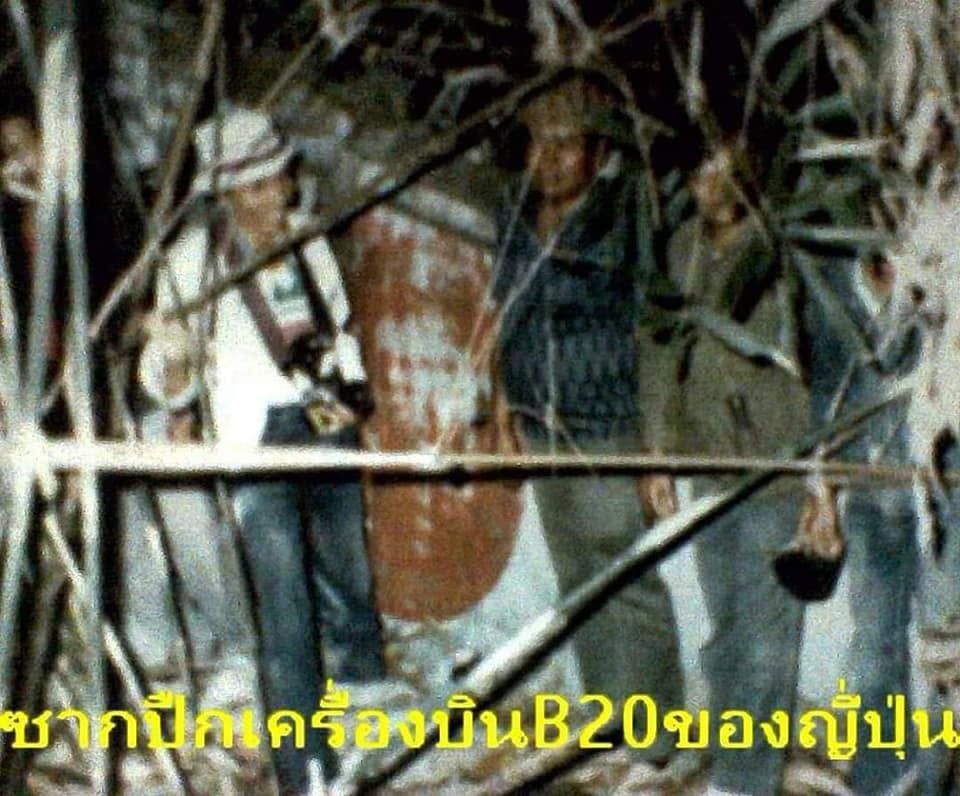
Image 1 (offsite link)
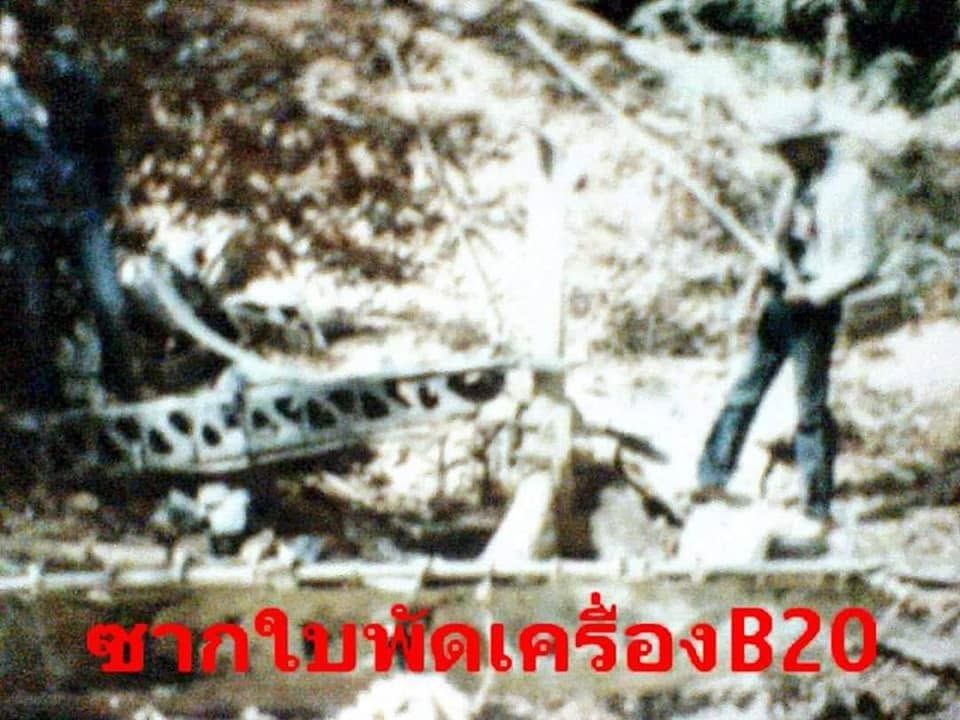
Image 2 (offsite link)
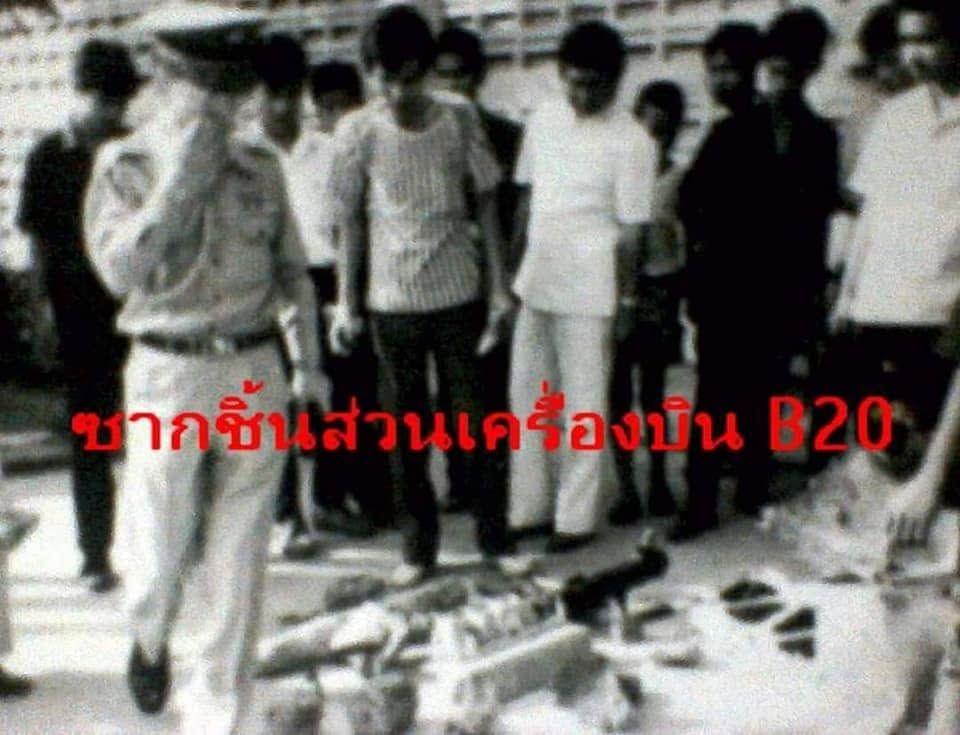
Image 3 (offsite link)
Last Updated on 8 September 2026
- Thansawath email of 11:33 01 Jun 2022; my ref: \02500 Tango\_Crash sites N TH for Tango\DETAIL SHEETS\J430126 Kanchanaburi [J09C]\Thansawath\20220601 1133 email Nak\a Nak bio, book title_20220601-105918_Drive.jpg, &ff[↩]
- My ref: \02500 Tango\_Crash sites N TH for Tango\DETAIL SHEETS\J430126 Kanchanaburi [J09C]\Other sources\220601 The Thailand-Burma Railway page 282.jpg[↩]
- Jungle Survival Tips (offsite link): “Heading downhill will likely lead to a stream which you can follow until it becomes a river, which will lead you out of the jungle. The wider the river the more likely there will be civilization.”[↩]
- Thansawath email 08:55 14 Jun 2022[↩]
- My ref: \02500 Tango\_Crash sites N TH for Tango\DETAIL SHEETS\J430126 Kanchanaburi [J09C]\Other sources\220601 Airplane Crash.doc[↩]
- Provided by Thansawath email of 10:29 12 Jan 2024. This particular report also uniquely describes the flight as having originated from Mingaladon, Rangoon, rather than from Don Muang, Thailand.[↩]
- From ww2aircraft.net blog: To answer your questions (offsite link) [↩]
- Photo: https://preview.redd.it/kawasaki-ki-48-army-type-99-twin-engined-light-bomber-v0-mod7o7ckim1f1.jpeg?width=1080&crop=smart&auto=webp&s=86ee3288325520b003f59b07207ff722d3066a43; my ref: \02500 Tango\_Crash sites N TH for Tango\DETAIL SHEETS\J430126 Kanchanaburi [J09C]\_jist\Aircraft\Ki-48a.jpg[↩]
- Development History of the Kawasaki Ki-48 (offsite link) [↩]
- Crew quarters were cramped. https://boxartden.com/reference/gallery/index.php/Aircam-Aviation-Series/Kawasaki-Ki-48-I-II-Sokei/32-Kawasaki-Ki_48-Sokei_Page_16-960; my ref: \02500 Tango\_Crash sites N TH for Tango\DETAIL SHEETS\J430126 Kanchanaburi [J09C]\_jist\Aircraft\ki-48gzz.jpg[↩]
- Crawling into his position from an aluminium ladder. https://boxartden.com/reference/gallery/index.php/Aircam-Aviation-Series/Kawasaki-Ki-48-I-II-Sokei/32-Kawasaki-Ki_48-Sokei_Page_25-960; my ref: \02500 Tango\_Crash sites N TH for Tango\DETAIL SHEETS\J430126 Kanchanaburi [J09C]\_jist\Aircraft\Ki-48kkz.jpg[↩]
- Radioman sat in cramped quarters. https://boxartden.com/reference/gallery/index.php/Aircam-Aviation-Series/Kawasaki-Ki-48-I-II-Sokei/32-Kawasaki-Ki_48-Sokei_Page_17-960; my ref: \02500 Tango\_Crash sites N TH for Tango\DETAIL SHEETS\J430126 Kanchanaburi [J09C]\_jist\Aircraft\ki-48h.jpg[↩]
- Ventral machine gun position of a Ki-48 light bomber. https://ww2db.com/image.php?image_id=12319; my ref: \02500 Tango\_Crash sites N TH for Tango\DETAIL SHEETS\J430126 Kanchanaburi [J09C]\_jist\Aircraft\Ki-48LLL.jpg[↩]
- Photo: https://www.warbirdsresourcegroup.org/IJARG/images/mitsubishiki21-2.jpg; my ref: \02500 Tango\_Crash sites N TH for Tango\DETAIL SHEETS\J430126 Kanchanaburi [J09C]\_jist\Aircraft\Ki-21d pt.jpg[↩]
- Mitsubishi Ki-21-II-Ko Army Type 97 Heavy Bomber Model 2-ko Cutaway Drawing Key (offsite link) [↩]
- Mitsubishi MC-21 (offsite link) [↩]
- A photo of a MC-20-I, with nickname Asagumo (Morning Cloud), used by Asahi Shimbun. Original author is unknown; uploaded by courtesy of Mr. Волков, the creator of “Уголок неба” Авиационный справочник – “Уголок неба” Авиационный справочник, CC BY-SA 3.0, https://commons.wikimedia.org/w/index.php?curid=4747799; my ref: \02500 Tango\_Crash sites N TH for Tango\DETAIL SHEETS\J430126 Kanchanaburi [J09C]\_jist\Aircraft\Ki-57cc.jpg, with annotation by author using Microsoft Publisher[↩]
- Series of photos provided by Thansawath email of 22:48 11 May 2022 (11.jpg, 12.jpg, 13.jpg, 15.jpg, 16.jpg, 18.jpg-20.jpg, and seem to be dated 18 Oct 1999. Thansawath identified the photographer and queried him for permission to use the photos (email 18:31 10 Jun 2022), but he was unresponsive: if the photographer should subsequently respond, and in the negative, I will remove the photos.[↩]
- Original at “Answer 114” http://www.weekendhobby.com/board/photo/picture2010/86255414442.jpg (offsite link) [↩]
- Original at “Answer 116” http://www.weekendhobby.com/board/photo/picture2010/86255414471.jpg (offsite link) [↩]
- Original at “Answer 115” http://www.weekendhobby.com/board/photo/picture2010/86255414454.jpg (offsite link) [↩]
- again, Thansawath attempted to contact the Facebook originator, but there was no response (Thansawath email of 18:31 10 Jun 2022).[↩]